


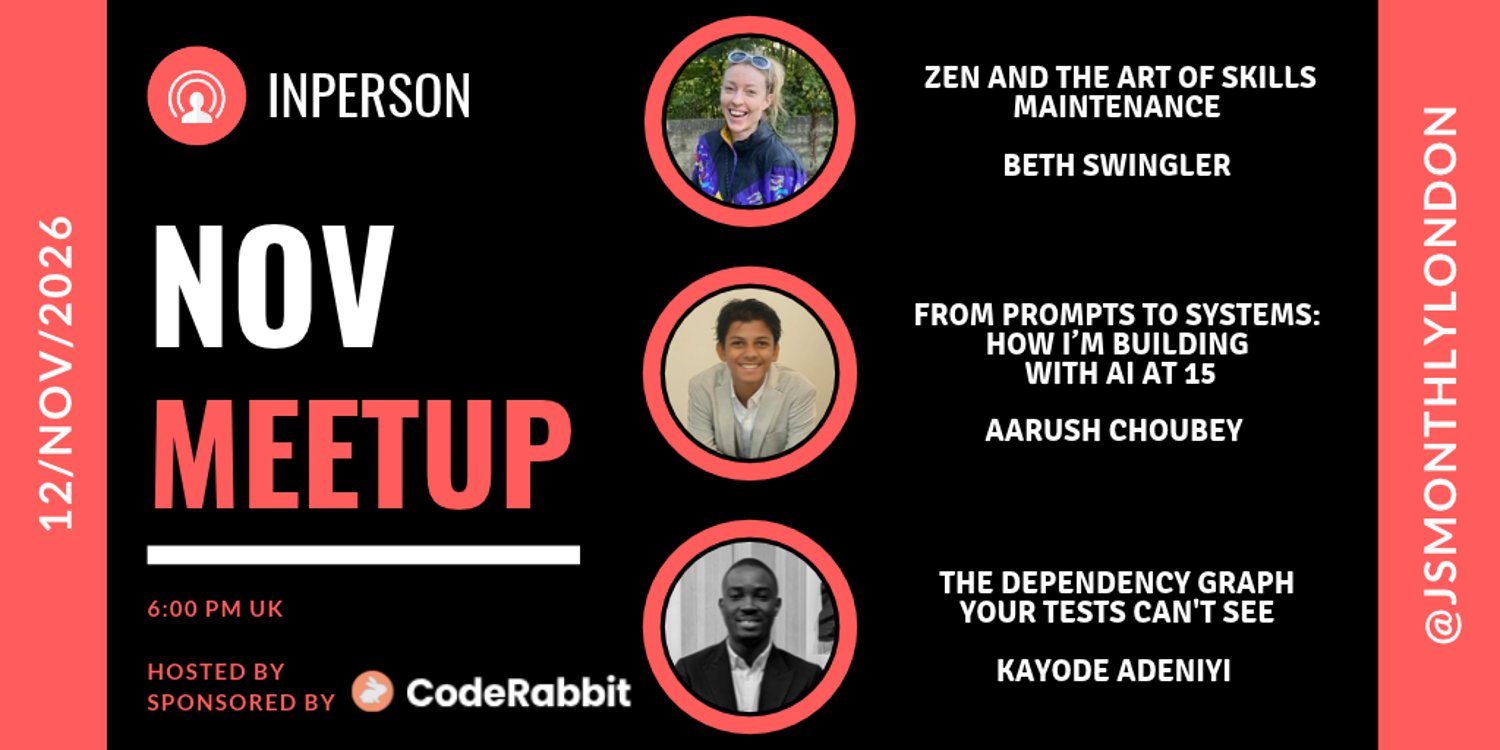
From Prompts to Systems: How I’m Building with AI at 15
What happens when you stop treating AI as a chatbot and start building systems around it?
At 15, I’m using AI to build businesses, create content and manage my everyday work. In this talk, I’ll share how I’ve gone from experimenting with different AI tools to developing practical workflows across my business, Vajra Works, my personal brand and my productivity systems.
I’ll explore how I choose the right tools, structure workflows, decide what to automate and keep human judgment involved. Through real examples, demonstrations and lessons from things that haven’t worked, I’ll show how AI can move beyond prompts into systems that help get meaningful work done.
The goal is to make this a practical and valuable session for the developer audience.


JavaScript Monthly London Meetup
Javascript evolution has sped up (a lot) in recent years and event the most veterans developers find it hard to keep up with the latest trends. This meetup group aims to bring you monthly bite-sized updates on the world of Javascript along with a healthy dose of nice people, beer and pizza.
Please use your full name when registering, as some of our venues require a full list of attendees beforehand. You have an idea and you want to be a speaker?We are always looking for more speakers - submit your talk here (https://docs.google.com/forms/d/e/1FAIpQLSdFaatfveOUbrmer47jYb5J4J4ttxAFc1CgTjUDltBXmDOJmg/viewform)







Platform Sponsors

Torc is a community-first platform bringing together remote-first software engineer and developer opportunities from across the globe. Join a network that’s all about connection, collaboration, and finding your next big move — together.
Join our community today!

Supercharge your dev team with AI code reviews
Get your free trial now
From Prompts to Systems: How I’m Building with AI at 15
What happens when you stop treating AI as a chatbot and start building systems around it?
At 15, I’m using AI to build businesses, create content and manage my everyday work. In this talk, I’ll share how I’ve gone from experimenting with different AI tools to developing practical workflows across my business, Vajra Works, my personal brand and my productivity systems.
I’ll explore how I choose the right tools, structure workflows, decide what to automate and keep human judgment involved. Through real examples, demonstrations and lessons from things that haven’t worked, I’ll show how AI can move beyond prompts into systems that help get meaningful work done.
The goal is to make this a practical and valuable session for the developer audience.
JavaScript Monthly London Meetup
Javascript evolution has sped up (a lot) in recent years and event the most veterans developers find it hard to keep up with the latest trends. This meetup group aims to bring you monthly bite-sized updates on the world of Javascript along with a healthy dose of nice people, beer and pizza.
Please use your full name when registering, as some of our venues require a full list of attendees beforehand. You have an idea and you want to be a speaker?We are always looking for more speakers - submit your talk here (https://docs.google.com/forms/d/e/1FAIpQLSdFaatfveOUbrmer47jYb5J4J4ttxAFc1CgTjUDltBXmDOJmg/viewform)
Platform Sponsors
Torc is a community-first platform bringing together remote-first software engineer and developer opportunities from across the globe. Join a network that’s all about connection, collaboration, and finding your next big move — together.
Join our community today!
Supercharge your dev team with AI code reviews
Get your free trial now
Get in touch!
hi@guild.host