


Systems of Traditional Knowledge, Pluriversal Design


In-Person
Address available to attendees
Online
Link available to attendees
Community and help
Community links are available to active Members after joining and any required approval.
Contact organizersEmail from your verified Guild email address. Guild relays the conversation without displaying personal email addresses here.

Ready to join in on the fun?
Modern systems approaches acknowledge multiple perspectives through Critical Systems Thinking (CST), a framework built on theoretical and practical pluralism (complementarism). Yet a deeper challenge arises when these perspectives stem from entirely different realities. Canada’s distinctive multicultural landscape increasingly wrestles with this dynamic, navigating the tensions between dominant Anglo-European frameworks and traditional knowledge systems held by Indigenous and immigrant communities.
As a primary academic epicentre for pluriversal design, OCAD University actively engages with this shift, recognizing knowledge systems as distinct, co-existing, and sometimes conflicting worlds. This dialogue is gaining global momentum, culminating in Toronto hosting the Pluriversal Design Special Interest Group of the Design Research Society in summer 2029.
In October, OCAD U researchers participated in the second annual retreat of the Canada Research Chair in Pluralistic Societies in Calgary. In this Systems Thinking Ontario session, we invite two contributors to share their work and reflect on their experiences. Our conversation may offer insights on how pluriversal world-making can reshape design and policy for a systems-oriented audience.
The full description appears at https://wiki.st-on.org/2026-11-18
Contributions
Pi'ikea: What Happens After Critique? Makawalu and the Relational Work of Cognitive Justice
Whose knowledge shapes the futures we imagine? How might encountering other ways of knowing change the questions we ask and the directions we pursue?
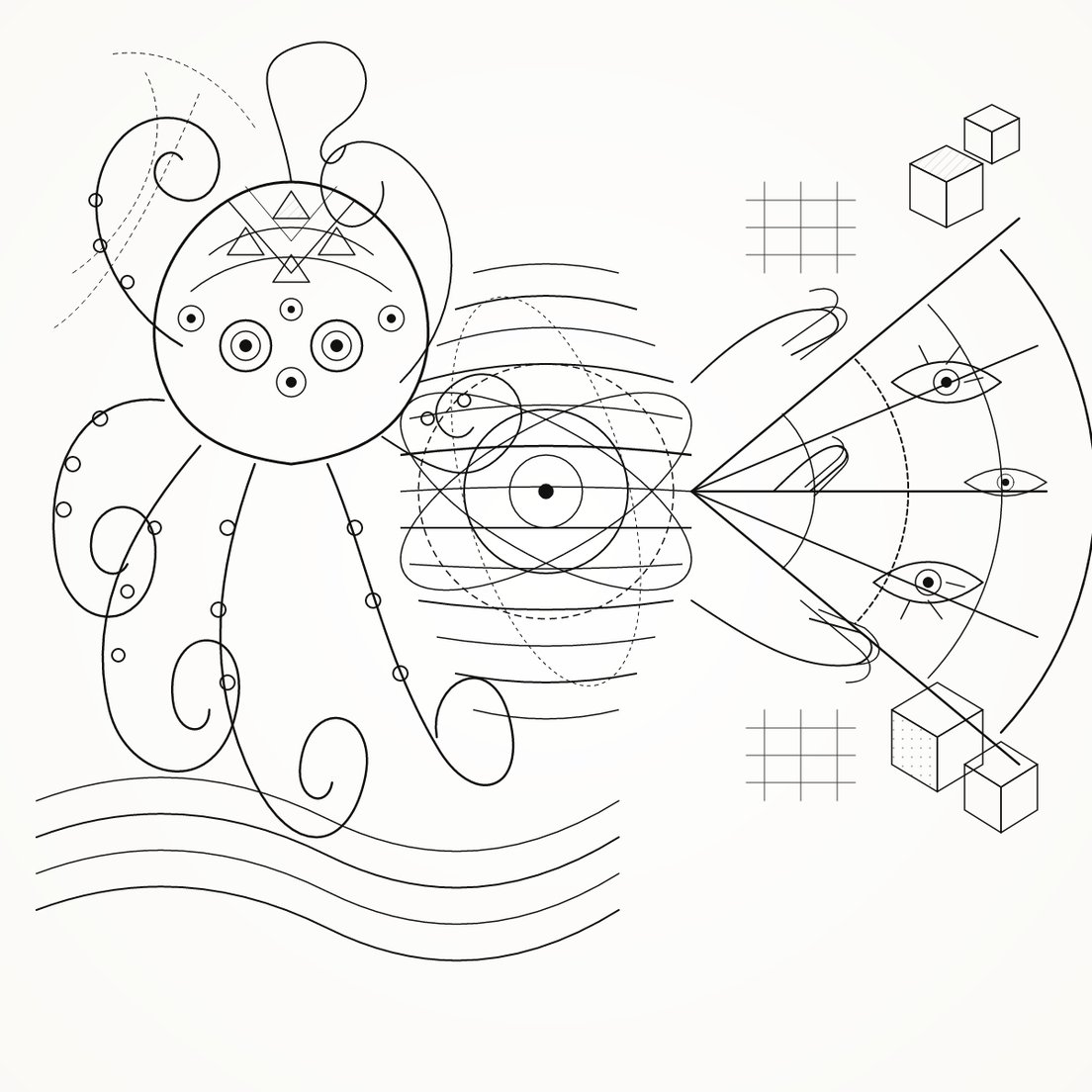
Drawing on ancestral teaching, lived experience and Indigenous pedagogy, Herman Piʻikea Clark explores these questions through Makawalu, a Hawaiian approach to seeing through multiple eyes. His great-grandmother’s lesson about the octopus offers a starting point for considering adaptation, survival and the continuity of identity within changing environments. The question No wai mai ʻoe?—“Who are you from?”—extends this inquiry to the inherited assumptions of disciplines and institutions.
Roberto: Toward Cognitive Justice through Design and Anticipation
A future where cognitive justice permeates and is embedded in societies is possible if we look beyond the structures of today that limit our creative abilities. Moving beyond systems that are myopic on scope and do not acknowledge plural knowledge systems requires an methodological examination of the systems themselves and their propensities.
By utilizing creative methods designed to enhance creative ability, a participatory futures workshop that surfaces not only what a society with cognitive justice could look like but also the tangible functions that would need to be built to support a transition from today.
Session Leaders
Herman Piʻikea Clark is an internationally recognized Kanaka Maoli (Indigenous Hawaiian) scholar, artist, and designer who serves as a Professor in the Faculty of Design at OCAD University. His extensive research and creative practice bridge contemporary design methodologies with Indigenous knowledge systems, focusing heavily on Pacific visual identity, place-based research, and decolonial pedagogy. As a leading voice in indigenous innovation, his insights offer a vital bridge between theoretical systems pluralism and the lived execution of pluriversal world-making. https://www.linkedin.com/in/herman-piikea-clark-01a815203/
Roberto Pires is a futures and systems researcher based in Toronto, completing a Master of Design in Strategic Foresight and Innovation from OCAD University, including an assignment as a Graduate Research Associate at the Super Ordinary Laboratory. He currently serves as Vice President of Conferences for the International Society for the Systems Sciences (ISSS). His work specializes in anticipatory creative emergence, investigating the functional interplay between communication frameworks, systemic design, and participatory care within foresight practices. https://www.linkedin.com/in/robertopires14/
David Ing will serve as moderator. He is an Adjunct Professor at OCAD University, and President pro tem for the ISSS.
Platform Sponsors

Supercharge your dev team with AI code reviews
Get your free trial now

Torc is a community-first platform bringing together remote-first software engineer and developer opportunities from across the globe. Join a network that’s all about connection, collaboration, and finding your next big move — together.
Join our community today!
Ready to join in on the fun?
Platform Sponsors
Supercharge your dev team with AI code reviews
Get your free trial now
Torc is a community-first platform bringing together remote-first software engineer and developer opportunities from across the globe. Join a network that’s all about connection, collaboration, and finding your next big move — together.
Join our community today!
Systems of Traditional Knowledge, Pluriversal Design
In-Person
Address available to attendees
Online
Link available to attendees
Community and help
Community links are available to active Members after joining and any required approval.
Contact organizersEmail from your verified Guild email address. Guild relays the conversation without displaying personal email addresses here.
Modern systems approaches acknowledge multiple perspectives through Critical Systems Thinking (CST), a framework built on theoretical and practical pluralism (complementarism). Yet a deeper challenge arises when these perspectives stem from entirely different realities. Canada’s distinctive multicultural landscape increasingly wrestles with this dynamic, navigating the tensions between dominant Anglo-European frameworks and traditional knowledge systems held by Indigenous and immigrant communities.
As a primary academic epicentre for pluriversal design, OCAD University actively engages with this shift, recognizing knowledge systems as distinct, co-existing, and sometimes conflicting worlds. This dialogue is gaining global momentum, culminating in Toronto hosting the Pluriversal Design Special Interest Group of the Design Research Society in summer 2029.
In October, OCAD U researchers participated in the second annual retreat of the Canada Research Chair in Pluralistic Societies in Calgary. In this Systems Thinking Ontario session, we invite two contributors to share their work and reflect on their experiences. Our conversation may offer insights on how pluriversal world-making can reshape design and policy for a systems-oriented audience.
The full description appears at https://wiki.st-on.org/2026-11-18
Contributions
Pi'ikea: What Happens After Critique? Makawalu and the Relational Work of Cognitive Justice
Whose knowledge shapes the futures we imagine? How might encountering other ways of knowing change the questions we ask and the directions we pursue?
Drawing on ancestral teaching, lived experience and Indigenous pedagogy, Herman Piʻikea Clark explores these questions through Makawalu, a Hawaiian approach to seeing through multiple eyes. His great-grandmother’s lesson about the octopus offers a starting point for considering adaptation, survival and the continuity of identity within changing environments. The question No wai mai ʻoe?—“Who are you from?”—extends this inquiry to the inherited assumptions of disciplines and institutions.
Roberto: Toward Cognitive Justice through Design and Anticipation
A future where cognitive justice permeates and is embedded in societies is possible if we look beyond the structures of today that limit our creative abilities. Moving beyond systems that are myopic on scope and do not acknowledge plural knowledge systems requires an methodological examination of the systems themselves and their propensities.
By utilizing creative methods designed to enhance creative ability, a participatory futures workshop that surfaces not only what a society with cognitive justice could look like but also the tangible functions that would need to be built to support a transition from today.
Session Leaders
Herman Piʻikea Clark is an internationally recognized Kanaka Maoli (Indigenous Hawaiian) scholar, artist, and designer who serves as a Professor in the Faculty of Design at OCAD University. His extensive research and creative practice bridge contemporary design methodologies with Indigenous knowledge systems, focusing heavily on Pacific visual identity, place-based research, and decolonial pedagogy. As a leading voice in indigenous innovation, his insights offer a vital bridge between theoretical systems pluralism and the lived execution of pluriversal world-making. https://www.linkedin.com/in/herman-piikea-clark-01a815203/
Roberto Pires is a futures and systems researcher based in Toronto, completing a Master of Design in Strategic Foresight and Innovation from OCAD University, including an assignment as a Graduate Research Associate at the Super Ordinary Laboratory. He currently serves as Vice President of Conferences for the International Society for the Systems Sciences (ISSS). His work specializes in anticipatory creative emergence, investigating the functional interplay between communication frameworks, systemic design, and participatory care within foresight practices. https://www.linkedin.com/in/robertopires14/
David Ing will serve as moderator. He is an Adjunct Professor at OCAD University, and President pro tem for the ISSS.
Get in touch!
hi@guild.host